By Marko | 8 min read
Hey there, travelers! Marko here.
If you are reading this, you are probably staring at a map of the Balkans right now, toggling between two tabs on your browser. On one side, the world-famous, sun-drenched coast of Croatia. On the other, its smaller, wilder neighbor, Montenegro.
You aren't alone. The search for comparisons between these two Adriatic gems has exploded recently. I see the questions popping up in my inbox constantly: "Marko, is Montenegro just a cheaper Croatia?" or "Can I really get the same views without the Dubrovnik crowds?"
Let’s be honest: choosing a holiday destination in Europe has changed. We all feel it. The search for "value for money" is now a huge driver for travelers like us. We want that European summer dream, but we also want our budget to make sense in this new economic reality.
So, here is the raw truth. I have driven these coastlines, hiked these mountains, and ordered coffee in both countries more times than I can count. While Croatia is the established superstar, Montenegro is the smart strategic choice for 2025.
Let’s break it down, round by round, with the real numbers.
Round 1: The Cost (The "Euro" Elephant in the Room)
Let’s address the biggest factor first. Historically, people thought the whole Balkan region was "cheap." That’s not quite true anymore. There has been a massive shift in the market.
The Croatia Situation: Structural Inflation
Croatia officially joined the Eurozone and the Schengen Area recently. While this makes travel easier, it has triggered a structural price increase, not just a temporary spike. Tourism prices there have risen by about 50% in the last three years, far outpacing Italy or Spain.
- The Reality Check: You are now looking at Western European prices. A simple coffee can run from €1.20 to €3.00, and a draft beer sits between €2 and €4.50. A standard mid-range dinner for two often hits €35–€60.
The Montenegro Advantage: Accessible Luxury
We use the Euro here too, but the value proposition is completely different. Montenegro isn't subject to the same inflationary pressures as the EU members yet.
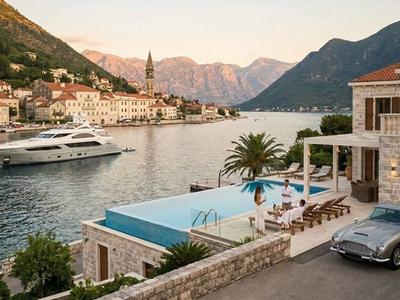
- The "Premium" Gap: For equivalent luxury accommodation, you are paying significantly less here. A mid-range room in Dubrovnik averages €100–€130 per night, while luxury suites easily exceed €500. In Montenegro, you can often book a premium boutique stay in Kotor2222or Budva3333 for the price of that standard room in Dubrovnik.
- Daily Spending: A budget-conscious traveler in Montenegro can eat well for €7–€12 per meal. Even a nice three-course dinner for two usually settles between €25 and €45. Check out our detailed breakdown on travel costs in Montenegro4444.
Marko’s Bottom Line: Choosing between them is like choosing between a 2-star Michelin restaurant (Croatia) and a 1-star Michelin restaurant (Montenegro). Both offer incredibly high-quality experiences, but in Montenegro, your budget allows for a "luxurious" trip rather than just a "standard" one.
Round 2: The Logistics (Beating the Border Blues)
This is the most critical update for 2025. If you are planning to visit both (which you should!), you need to know about the "Border Bottleneck."
The Problem: The Debeli Brijeg Crossing
The main road border between Croatia and Montenegro (Debeli Brijeg) is notorious. In July and August, queues can last 2 to 4 hours. It is unpredictable and can eat up half your day.
The Hack: The Dubrovnik-Budva Ferry
This is the game-changer we have been waiting for. There is a ferry route connecting Dubrovnik directly to Budva.
- Why take it? It has a fixed travel time of 2 hours. No traffic jams, no angry drivers.
- The Cost: It costs around €40–€50 one way.
- Is it worth it? Absolutely. While a bus might cost €32, the ferry buys you certainty. You are paying for a premium, stress-free arrival.
Driving Tips (If you must drive):
If you rent a car5555, avoid the main crossing. Try smaller borders like Kobila–Vitaljina (closest to the sea) or cross strictly before 7 AM or after 7 PM. Learn more about how to get around Montenegro6666.
Round 3: The Vibe & Nightlife (Pick Your Personality)
One misconception is that the "vibe" is the same. It’s not. Montenegro actually separates its nightlife and culture more distinctly than Croatia, allowing you to choose exactly what you want.
If you want the Party: Go to Budva
Budva7777 is the undeniable "Party Capital" of the Adriatic.
- The Scene: It’s energetic, loud, and open until dawn. We are talking beach bars, open-air clubs like Top Hill8, and summer festivals.
- The Crowd: It attracts a younger crowd looking for high-energy entertainment that is actually accessible/affordable compared to the exclusive, high-cost lounges of Dubrovnik.
If you want Romance: Go to Kotor
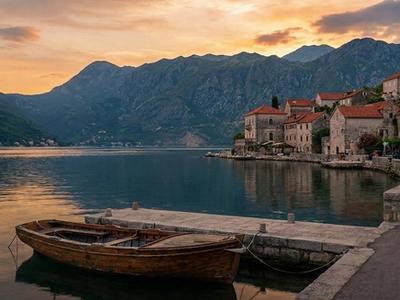
The Old Town of Kotor 9999 offers a "low-key" sophistication.
- The Scene: Think wine bars, live acoustic music, and cobblestone streets.
- The Quiet: The town generally quiets down around 11 PM. It is perfect for couples, families, or mature travelers who want to soak in the history without the thumping bass of a nightclub.
The Croatia Contrast:
Dubrovnik’s nightlife is high-quality but limited and expensive. It focuses on exclusive venues inside historic fortresses where cocktails come with a premium price tag.
Round 4: The Landscape (Sea & Summit)
This is my favorite part about my home. Montenegro is often called a "compact" destination, and that is its superpower.
Croatia is about the Archipelago.
If your dream is hopping from island to island on a ferry, Croatia wins. It has over a thousand islands and a massive, established infrastructure.
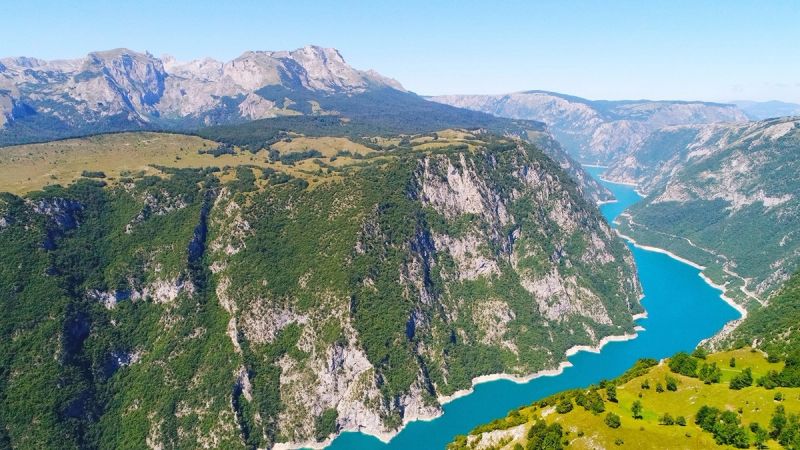
Montenegro is about "Sea & Summit".
You can wake up in a luxury marina in Tivat 10101010 (reminiscent of Monaco), and by the afternoon, you can be hiking in Durmitor National Park 11111111or rafting down the Tara River Canyon12121212.
- Efficiency: Because the country is small, you don't waste days traveling between locations. You can combine a mountain hike and a beach sunset in a single day.
Bonus: The Investment Angle (For the Dreamers)
I know some of you fall in love with the Balkans and start looking at real estate windows. Here is a quick stat:
- ROI: Montenegro offers higher rental yields (approx. 5.8% in Budva) compared to Croatia (4.9%).
- Speed: Buying property here as a foreigner takes 2–4 weeks, whereas in Croatia, the bureaucracy can drag it out for months. It is a market that is maturing fast, attracting investors who want the Mediterranean lifestyle before it becomes unaffordable.
The Verdict: Who Should Go Where?
Still undecided? Let’s simplify it.
Choose Croatia if:
- You want a classic "Island Hopping" holiday.
- You rely heavily on extensive public transport and ferries.
- You want polished, established luxury and don’t mind Western European prices.
Choose Montenegro if:
- You want Value: You want to make your Euro stretch 30–50% further.
- You want Variety: You love the idea of "Sea & Summit" — mountains and beaches in one trip.
- You want Authenticity: You want to find "hidden gems" like Ulcinj13131313 and avoid the "Game of Thrones" crush of Dubrovnik.
Marko’s Final Tip:
Don't choose. Combine them. Fly into Dubrovnik (DBV), spend two days there, and then take the ferry to Budva. You get the grandeur of Croatia and the wild beauty (and great prices) of Montenegro in one epic trip.
What do you think? Are you ready to trade the crowds for the dramatic peaks of Kotor?
Tell me in the comments: Are you Team "Party in Budva" or Team "Wine in Kotor"?
Note: Prices and schedules mentioned are based on 2024/2025 projections and may vary by season.