1. Introduction: The Imperative of Temporal Selection
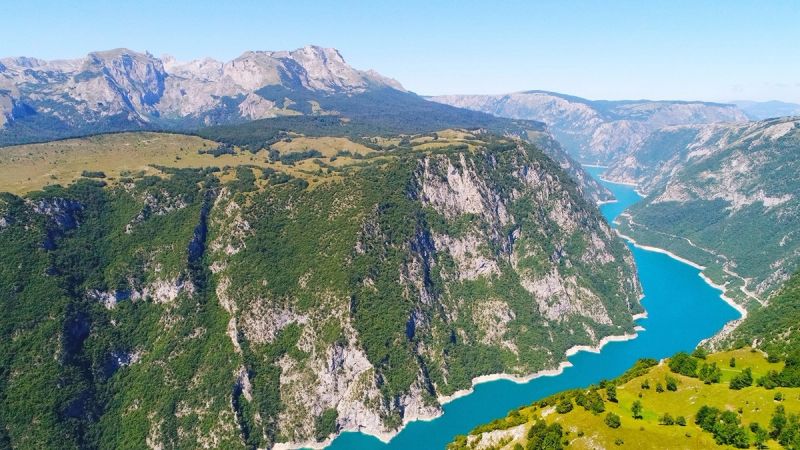
Montenegro is deceptive. Although geographically compact, this nation presents one of the most complex and diverse topographies on the European continent.
It is not a flat coastline; it is a collision of alpine peaks and Mediterranean waters.
This physical characteristic results in extreme climatic variability that challenges the simplistic notion of a universal "best time" to visit.
In 2026, Montenegro has completed its transition from a hidden Adriatic gem to a high-demand mass tourism destination.
Consequently, the selection of your travel dates has become the single most critical determinant for the quality of your visitor experience.
This is not a fluff piece about sunny days. This is an exhaustive, multidimensional analysis of climatological dynamics, crowd flows, and the strategic use of the "Shoulder Season."
We will dissect the interaction between Mediterranean and Alpine regimes, the economic elasticity of seasonal pricing, and the logistical realities of port congestion in the Bay of Kotor.
Our goal is to identify the temporal windows that offer the ideal convergence of thermal comfort, infrastructure functionality, and economic viability, avoiding the friction generated by the "overtourism" characteristic of peak months.
2. Climatological Dynamics and Regional Variance
To understand Montenegro, you must recognize that the country does not operate under a monolithic weather regime.
The Dinaric Alps rise abruptly from the coast, creating an orographic barrier that divides the country into distinct zones.
What is true for the coast (Budva, Kotor) is often irrelevant for the interior (Cetinje) or the mountainous north (Žabljak).
2.1 The Mediterranean Coastal Zone (The Adriatic & Bay of Kotor)
The primary destinations—the Bay of Kotor, Budva Riviera, and Ulcinj—operate under a classic Mediterranean regime: long, hot, dry summers contrasted by mild but exceptionally wet winters.
2.1.1 Thermal Profile and Solar Exposure
During the summer months, the Montenegrin coast experiences robust temperatures that define the "sun and sea" experience.
- July: Statistically the hottest month in Kotor. Average maximum temperatures oscillate between 26°C and 30°C, though heatwaves can push these significantly higher.
- Budva: The epicenter of beach tourism presents a similar profile—hot and sunny.
While summer storms occur, they are brief and do not alter the overall thermal profile.
- Solar Intensity: July offers the maximum daily insolation, averaging 10 hours of full sun per day.
While this is perfect for marine activities, it imposes significant challenges for urban exploration in stone cities like Kotor Old Town, where the "heat island" effect can make afternoon walking physically exhausting.
The Autumn Drop:
September maintains a summer-like profile with average highs of 25°C, effectively extending the high season. However, the transition is sharp.
By November, averages drop to 13°C, and by January, lows hit 4°C to 5°C.
At these temperatures, the coast ceases to be a beach destination and reconfigures itself as purely a cultural and scenic landscape.
2.1.2 Precipitation Anomalies: The "Orjen Effect"
This is the data point that most tourists miss. Montenegro receives a staggering volume of rainfall, particularly in the transition months.
- The Physics: Coastal mountains like Mount Orjen act as formidable barriers to moist air masses from the Mediterranean.
- When this air is forced up the mountain slopes (orographic lift), it cools and condenses, resulting in intense rainfall on the windward sides.
- The Record: Certain areas around the Bay of Kotor hold European records for annual precipitation.
The October/November Danger Zone: October marks the definitive start of the rainy season.
- It historically receives between 152 mm and 203 mm of rain.
- November is statistically the wettest month in Kotor, averaging 167.3 mm.
Impact: This is not just light drizzle. These are often torrential storms that cause localized flooding and transport interruptions.
Probabilistic analysis for October in Budva/Kotor suggests 11 to 14 days of rain, classifying weather conditions as "unpleasant" or "poor" for outdoor tourism.
2.2 The Continental and Alpine Interior
In stark contrast, the interior—covering Podgorica, Cetinje, and the northern parks like Durmitor—experiences a continental and, at high altitudes, alpine climate.
2.2.1 The Podgorica Heat Island
Podgorica, situated in a low-altitude plain, is notorious for scorching summers.
The lack of a direct sea breeze combined with the basin topography results in temperatures that frequently exceed the coast.
However, during the wet season, the capital acts as a rain catcher, with annual precipitation hitting 1,700 mm.
Strategic Advice: Avoid Podgorica in peak summer (extreme heat) and peak autumn (intense rain). Spring is the ideal window.
2.2.2 The Alpine Winter & Ski Season
In northern hubs like Žabljak and Kolasin, winter is severe.
Seasonal averages hover around -10°C, with significant and lasting snow cover.
This sustains a robust ski season from January through late March.
The Summer Refuge: The mountains play a crucial role in summer.
With pleasant averages of 22°C in Cetinje and cool nights in Durmitor, they offer an essential thermal escape for travelers fleeing the oppressive heat of the coast in July and August.
2.3 Marine Thermodynamics: The Swimming Equation
For a significant portion of visitors, swimming viability is the deciding factor.
Analysis of water temperature reveals a critical thermal asymmetry between spring and autumn due to the thermal inertia of the oceans.
Month
Avg Sea Temp (°C)
Viability
Contextual Analysis
May
~18-19°C
Low
Only for the brave. The water retains winter cold. Generally considered unfit for casual swimming.
June
21-24°C
Moderate
"Refreshing. Early June can still be cold (21°C), becoming pleasant only in the second half."
July
24-25°C
High
Ideal conditions for prolonged aquatic activities.
August
26°C
Peak
The annual maximum. Perfect for long swims.
September
23-24°C
High
The "Velvet" Season. Water retains summer heat, remaining significantly warmer than June despite similar air temps.
October
19-20°C
Low/Mixed
Rapid cooling. Possible in early October on sunny days, but generally risky and cold.
Strategic Insight: September is vastly superior to June for beach tourism.
The water (23-24°C) is comparable to July, whereas June water is still warming up.
3. Crowd Dynamics and Carrying Capacity
The concept of "Best Time to Visit" is inextricably linked to crowd density.
The Montenegrin coast is geographically narrow, sandwiched between mountains and sea, and its historic cities have extremely limited spatial carrying capacity.
3.1 The High Season Phenomenon (July-August)
During peak summer, coastal infrastructure operates under maximum strain.
- Traffic Paralysis: Field reports indicate severe congestion along the Jadranska Magistrala.
- Short commutes that normally take 9 minutes can extend to 40 minutes or more due to excessive volume.
- Topography offers few alternative routes.
- Urban Density: In Budva and Kotor Old Town, physical space becomes a scarce resource.
- Popular beaches require early morning arrival to secure sand space, while noise pollution peaks.
3.2 The Cruise Industry Impact in Kotor Bay
A defining variable for crowd levels in Kotor is the cruise ship schedule.
- Scale of Impact: A single large cruise ship can disembark thousands of passengers into a small town with narrow medieval streets.
- When multiple ships dock, the Old Town becomes virtually impassable, creating bottlenecks at the gates.
- 2025 Outlook: Cruise schedules for 2025 indicate intense activity through spring, summer, and early autumn.
- In contrast, winter months show minimal activity. For example, in December 2025, the schedule lists only one significant visit, the Viking Vesta on December 19th.
- Local Sentiment: Ships are often described as "obnoxious behemoths" that block the view and generate noise pollution, disturbing the tranquility of the bay.
Mitigation Strategy: If visiting during cruise season, check the official Port Authority schedule.
Visit the Old Town before 09:00 or after 17:00, when passengers have departed.
4. The "Shoulder Season": Strategic Advantage Analysis
Our central research conclusion points to the strategic superiority of the "Shoulder Season."
In Montenegro, this is bifurcated into two distinct windows: The Vernal (Spring) and The Autumnal.
4.1 The Autumnal Shoulder Season (September - Early Oct)
September is widely regarded by experts as the ideal month, representing the perfect equilibrium point.
- The "Velvet Season": Air temperatures moderate to comfortable levels (max 25°C), while the sea remains warm (23-24°C).
- Crowd Reduction: As families return to school, the frenetic energy of August dissipates, resulting in a "more relaxed and private" environment.
- Infrastructure Availability: Unlike winter, almost everything is open. Exclusive beach clubs hold closing events late in the month.
- For instance, Nikki Beach is predicted to host its closing party around September 28, 2025.
- Almara Beach Club also operates until mid-September.
The October Buffer: Early October can offer pleasant days (21°C), excellent for hiking, but swimming viability drops rapidly, and rain risk increases.
4.2 The Vernal Shoulder Season (May - June)
The spring season is characterized by aesthetic appeal and mild temperatures.
- Nature & Landscape: Following winter rains, the landscape is vibrantly green. May is exceptional for photography and nature hiking.
- Events like the "Mimosa Festival" in Herceg Novi highlight this floral richness.
- Hiking Conditions: Temperatures in May (rising to 22°C) are ideal for physical exertion.
- Climbing the Kotor Fortress walls is infinitely safer and more comfortable than in July heat.
- Limitations: The main drawback is sea temperature (18-19°C), making swimming reserved for the hardy.
- Additionally, high mountain passes in Durmitor may still have residual snow, limiting access to some trekking routes until early June.
5. Economic Analysis of Seasonality
The law of supply and demand exerts a powerful influence on travel costs in Montenegro, making date selection a decisive budgetary factor.
5.1 Price Elasticity in Hospitality
Accommodation rates exhibit extreme elasticity. Market analysis suggests prices can double or triple during high season.
- Real World Example: A property costing £650 for an 8-night stay in April can jump to £1,350 for the exact same period in peak summer.
- This applies to both luxury hotels and private Airbnbs.
5.2 Daily Budget & Cost of Living
- Shoulder Season Budget: An economic traveler can expect to spend between €40 and €60 per day (accommodation + food + transport).
- High Season Budget: To maintain the same standard in July/August, the budget must be significantly higher due to premium pricing on hospitality, car rentals, and entrance fees.
ROI Verdict: The Shoulder Season (especially May and late Sept/Oct) offers the best Return on Investment, providing access to the same infrastructure and natural beauty for a fraction of the cost.
6. Regional Specifics: Where to Go When
6.1 Bay of Kotor (Boka Kotorska)
- Ideal Window: May and September.
- Critical Factor: Cruise Schedule and Rain.
- Dynamics: The steep mountains trap clouds. Even in summer, brief storms occur. In autumn, rain becomes heavy.
- September offers the best balance of calm waters and manageable population density in Perast and Kotor.
6.2 The Budva Riviera
- Ideal Window: June and September.
- Focus: Beach Tourism and Nightlife.
- Dynamics: Budva is the epicenter of mass tourism. August is described as "sultry" (35°C) with extreme overcrowding.
- For nightlife enthusiasts (like those visiting Top Hill), July/August are peak; for relaxation, avoid them. The beach season effectively closes in late October.
6.3 The Northern Mountains (Durmitor)
- Trekking Window: July to September.
- Ski Window: January to March.
- Dynamics: The north operates on a distinct calendar. In May, snow may still block trails.
- Summer offers a cool refuge (13°C-22°C). Mid-October brings the "golden season" of autumn foliage, offering spectacular visuals, though night temps drop drastically.
7. Risks, Limitations, and Mitigation
7.1 Meteorological Reliability in Late Autumn
Travelers considering late October or November must be aware of severe weather risks.
- Monsoon Intensity: The coast is prone to "monsoon-like" rainfall.
- November can register between 167mm and 334mm of rain.
- Consequences: Rains of this magnitude can lead to landslides, road closures, and cancellation of boat tours.
- Flood events have been recorded in November, affecting infrastructure in Danilovgrad and Podgorica.
7.2 Seasonal Closures
While low season offers the lowest prices, it comes with a utility reduction.
- Beach Clubs: Major venues like Nikki Beach and Almara close in late September.
- Tours: Boat excursion frequency drops drastically. Availability is not guaranteed and depends on immediate demand.
- Transport: "Cabless" travel becomes challenging in winter due to reduced public transport frequency. We recommend renting a car for reliability.
8. Strategic Synthesis and Recommendation
The integrated analysis of climate, crowds, and costs confirms that the "Shoulder Season"—and specifically the month of September—represents the ideal convergence of favorable variables for most travelers.
8.1 The "Goldilocks" Window: September
September avoids the thermal stress of August and the hydrological stress of November.
It retains the "summer promise" of the Adriatic (swimming, sun, full services) without the sociometric burden of mass tourism.
- Climate: Warm (Max 25°C), Sea (23°C).
- Crowds: Moderate to Low.
- Cost: Moderate (falling from August peaks).
- Verdict: Perfect for mixed itineraries (Beach + Culture + Food).
8.2 The Hiker's Window: June and October
For those prioritizing physical activity and cultural exploration over swimming:
- June: Offers long days and green landscapes.
- October: Offers stable cool weather and autumn foliage, provided the trip occurs in the first half of the month to mitigate rain risk.
8.3 The Budget Strategy: May and October
Travelers with high price sensitivity should target the edges of the shoulder season.
May and October provide the lowest accommodation costs while still offering functional tourist infrastructure.
However, this comes with a trade-off in weather reliability and water temperature.
8.4 Summary Table: Seasonal Suitability
Feature
Winter (Nov-Mar)
Spring (Apr-May)
Summer (Jun-Aug)
Autumn (Sep-Oct)
Climate
"Cold/Wet (Coast), Snow (North)"
Mild/Green
Hot/Dry
Warm/Transition
Crowds
Minimal
Low
Excessive
Moderate
Prices
Low
Low/Medium
Peak
Medium/Low
Swimming
None
Poor (Cold)
Excellent
Good (Sept) / Poor (Oct)
Hiking
No (Snow)
Good
Good (Heat risk)
Excellent
Risks
Floods/Roads
Residual Snow
Heatstroke/Traffic
Rain (Late Oct)
Final Word: For the traveler seeking the "Best Time to Visit" by balancing climate, crowds, and cost, September represents the definitive answer.
It is the only month that sustains beach tourism viability while delivering the low-season promise of space, value, and authenticity.
Goraput Business Note:
Are you a tour operator looking to fill spots in May or October?
Goraput specializes in marketing the "Shoulder Season" to extend your booking calendar.
Partner with us to reach year-round travelers.