Hey, fellow travelers!
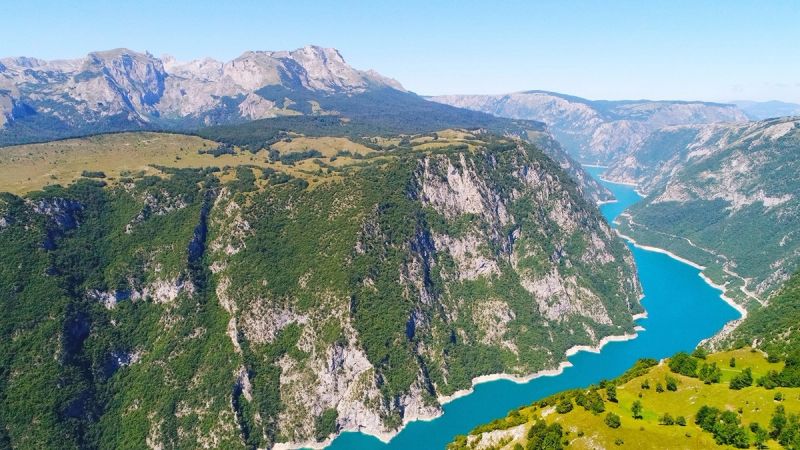
Every time I post a photo from the top of Kotor's fortress or the middle of the Tara River Canyon, the first comment is always the same: "Wow, where is this?!"
Let's be honest, Montenegro can be a bit of a beautiful mystery. It’s not Italy or Greece, whose maps we all know by heart. But that, my friends, is its superpower.
So, let's finally answer the big question. In this guide, I'm going to put Montenegro on the map for you—literally. But more importantly, I'm going to show you why its unique location makes it the perfect, adventure-packed destination.
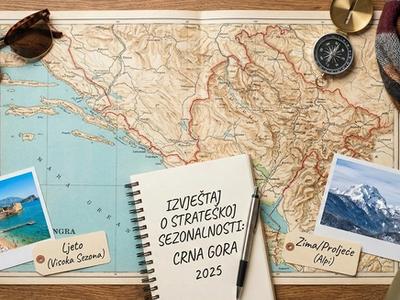
So, Where is Montenegro on a Map?
Let's get straight to it.
Montenegro is a country in Southeastern Europe. It’s located on the western Balkan Peninsula and has a stunning coastline on the Adriatic Sea.
Think of it this way: if Italy is the "boot" kicking a "ball" (Sicily), Montenegro is just across the sea from Italy's "heel."
The "Balkan Hub": Montenegro's Neighbors
Here’s where it gets really interesting for a travel planner. Montenegro is small, but it’s bordered by five other countries, placing it at the crossroads of Adriatic and Balkan culture.
This makes it the ultimate hub for a "Balkan road trip".
Here's the layout:
- Croatia to the west (This is the most popular, and most complicated, entry point. More on that in a moment.)
- Bosnia and Herzegovina to the northwest
- Serbia to the northeast
- Kosovo to the east
- Albania to the southeast
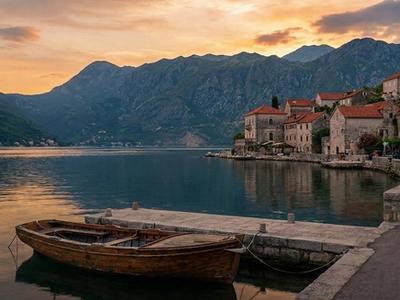
You can wake up in the medieval walls of Kotor, drive a few hours south, and be in the wild, rugged mountains of Albania for lunch. That's the magic of this region.
The Land of Two Worlds: Sea & Summit
This is the Goraput DNA. You must understand this to understand Montenegro.
The country's geography is what makes it a world-class destination. It’s a tiny nation of two distinct, epic worlds:
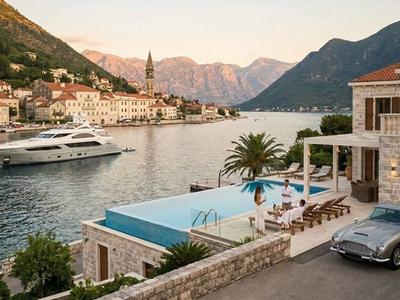
- The "Sea" (The Coast): This is the Montenegro you’ve seen in photos. It’s the "elegance polida" of the Adriatic, with glamorous marinas, Venetian-style towns like Kotor and Budva, and crystal-clear waters.
- The "Summit" (The Mountains): This is the wild heart of the country. Just a short drive from the coast, the landscape explodes upwards into some of the "most rugged terrains in Europe". This is home to Durmitor National Park and the Tara River Canyon, the deepest canyon in Europe.
You can literally swim in the Adriatic in the morning and be on a mountaintop hike by the afternoon.
The "How-To": Essential Logistics (This is NOT the EU!)
Okay, listen up, because this is the most important, practical advice I can give you.
Montenegro’s location creates a "strategic paradox" that confuses so many travelers. It’s my job to make it simple for you. Here’s what you must know.
Visa and Documentation
- Montenegro is NOT in the European Union. It is a candidate to join (and the front-runner!), but as of 2025, it is not a member.
- Montenegro is NOT in the Schengen Area. This is the big one. The open-border zone of Europe does not include Montenegro.
Here’s why this matters for you:
The Good News: Most travelers don't need a visa. Citizens from the EU, UK, US, and Brazil (among many others) can enter visa-free for 90 days.
The Great News (The "Schengen Hop"): For long-term travelers in Europe, Montenegro is a gift. Because it’s outside the Schengen zone, your 90-day "Schengen clock" stops the moment you enter. You can "hop" over to Montenegro, reset your clock, and enjoy 90 new days here without violating your Schengen visa.
Marko's Pro-Tip (DO NOT FORGET THIS): Montenegro has a mandatory 24-hour registration rule.
- If you're in a hotel, they will do this for you automatically.
- If you're in an Airbnb or private stay, you must go to the local tourist office and register yourself. Failure to do this can result in a heavy fine when you try to leave the country.
Money (Euros, but... )
And now for the best, most confusing part...
Yes, Montenegro uses the Euro (€).
This is incredibly convenient. You don't have to deal with changing money or confusing exchange rates. The "but" is a fun piece of trivia: Montenegro is not actually in the Eurozone (the group of EU countries that use the Euro). They unilaterally adopted it in 2002 to stabilize their economy.
For you, the traveler, it just means life is easy. The prices you see are in Euros.
How to Get to Montenegro: Flights & Airports
Your choice of airport is a strategic decision that will shape your whole trip. Don't just book the cheapest flight! Here’s my breakdown of the three main gateways:
- Tivat (TIV): The Coastal Gateway
- Best for: Kotor, Budva, and the Bay of Kotor. This is the closest airport to the main tourist hotspots.
- The Catch: It's a smaller, seasonal airport.
- Podgorica (PGD): The Capital Gateway
- Best for: The capital city, visiting the mountains (Durmitor, Kolašin), exploring Lake Skadar, or heading to the southern coast.
- The Catch: It's a 1.5 to 2-hour drive to the main coastal towns like Kotor.
- Dubrovnik (DBV) in Croatia: The "Dubrovnik Gambit"
- Best for: Travelers on a budget or on a multi-country trip. It’s a major airport with lots of cheap flights.
- The Catch (It's a BIG one): You must cross the Croatia-Montenegro border. Because Croatia is in the Schengen Area, this is a "hard" external EU border. In peak summer, the wait time at this border can be 2 to 4 hours. The money you saved on the flight, you might pay for in time and frustration.
Your Next Step: Ready to Dream?
So there you have it. You're now an expert on where Montenegro is and why its unique spot in the world makes it such a thrilling place to visit.
It's not just a location; it's a gateway to the best of the Balkans, a land of stunning contrasts, and a place that's—for now—still one of Europe's best-kept secrets.
Now that you know how to get here, are you ready to start dreaming about what to do?
Your mission starts here: Watch our cinematic journey, "The Dream of Njegoš," and let the adventure begin.
Got questions? Still confused about the border? Drop a comment below! I read and answer every one.